

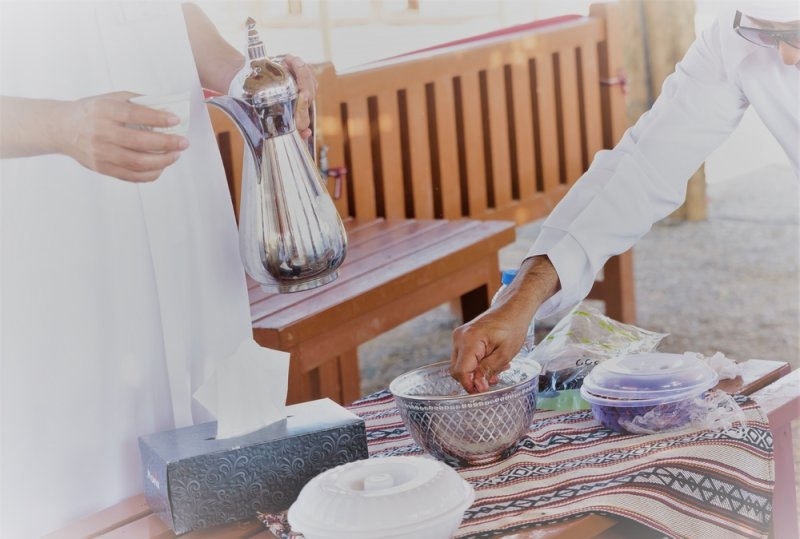
In everyday interactions, one might try insisting on a guest taking the most comfortable seat, paying for something, keeping someone at their place longer, or declining an invitation even if they want to accept. Such actions will often appear perplexing when considered only in terms of another culture's norms.
The meaning of ‘taarof’ can be best understood when considered as a method of social interaction and courtesy. Taarof could include verbal statements, along with gestures, invitations, refusals, and relationship expectations. This social practice is deeply ingrained in the society of Iran and is still important, although its appearance may differ from person to person, family to family, generation to generation, and situation to situation.
Taarof encompasses a wide range of social and linguistic practices employed to convey courtesy, respect, generosity, humility, and deference. The Persian word is hard to translate literally since it can be applied to refer to either linguistic or social practices.
In Taarof, in Persian culture, one can find linguistic expressions of elevating a person while at the same time minimising oneself. Moreover, it can involve the generous offer, persuasion to accept some food or hospitality, and even refusal with subsequent acceptance of something. This kind of communication allows conveying social respect.
Taarof also demonstrates the difference between two people in terms of their age, status, level of acquaintance, or relation. It is not always deception or hypocrisy. Some types of Taarof are genuine acts of generosity; others are socially recognised polite practices.
Also Read: Chaharshanbe Suri: The Persian Fire Festival and Traditions
It operates on the basis of verbal language, gestures, offers, refusals, hospitality, and knowledge of the social context. The participants usually understand the cues that may be harder to catch for others.
There is one such typical cue involving an offer-refusal pattern. An individual might offer to pay for a meal or give a gift, but the other refuses. The one giving insists, and the other accepts it in case the offer is genuine.
Another type occurs as part of courtesy acts in everyday life. One might invite the other to lead through the doorway, offer the best seat, or force the guest to eat more food.
This system is flexible in nature. Every offer does not necessarily mean Taarof, and every refusal does not mean "yes." The context, tone, level of familiarity, and persistence play roles. Visitors need to be cautious about interpreting every polite cue oppositely.
There are no officially approved manuals on how to practice Taarof.
It is an amalgamation of socially acquired rules which depend on a specific situation.
They include such principles as treating guests with respect, letting the other person go first, being hospitable, speaking with respect, and, in certain cases, doing nothing that might make the other person feel embarrassed or dishonoured.
Another principle is reciprocity. Sometimes, when maintaining a certain relationship, one might exchange invitations, gifts, compliments, or offers. The act itself has a value even without any intention to reciprocate.
These rules are not absolute. Modern Iranian society includes people of various lifestyles, character traits, generations, and social environments. Taarof might be quite intense in some families or formal circumstances but less intense among friends.
Persian Taarof might occur within ordinary circumstances that would be uneventful to an Iranian but quite unusual to a stranger.
Within the family circle, one’s host can offer a meal, tea, fruits, or dessert several times until his guest finally accepts the gesture. On any occasion, one’s guests can be urged to sit in a certain spot or eat before anyone else.
Taarof may occur in the act of making payments at a restaurant or shop. This occurs when one attempts to make a payment for other people who initially resist the offer. It becomes apparent when there is a sense of the social ritual.
It can also occur during the act of making invitations. One may warmly invite another individual to come to their house despite the lack of scheduling for the visit.
The taarof culture will be able to help individuals maintain social distance and determine the level of respect that one has for the other person. The age of the individual, familiarity, profession, and the degree of formality might determine the levels of respect.
One might use more formal language when dealing with a relative who is older, a respected teacher, a guest, or even a business partner as opposed to using language when dealing with friends. The values might take different forms.
The taarof culture might also minimise social friction among individuals. Individuals can achieve this by making the offer first, giving another person priority, and being respectful while talking. In this case, the Iranian etiquette goes beyond rituals; it helps maintain good relations.
It is not necessary to be familiar with all the intricacies of Persian etiquette when visiting Iran. Some guidelines will be enough.
First, keep in mind the context in which people are saying things and do not take everything literally. In case people offer you something, for example, food or tea, sometimes they expect you to reject their offer at first and then invite you. When you really need it, you can just respond positively to make it clear.
Second, return the courtesy. Always thank people who treated you well and never assume that you have a right to accept offers.
Third, watch other people. Sometimes it is more helpful than knowing about any supposed rules. When you are not sure whether an offer was really made, just ask politely.
Take an instance where someone invites you for dinner. In such a scenario, the host might continuously encourage you to have more food. Despite being willing to eat more, you may find yourself turning down the invitation. The continuous insistence by the host will, in most cases, be considered hospitality.
Secondly, seating the most honoured guest in the best seat is also a way of giving hospitality. It is a gesture that shows respect to that particular guest because of his or her status.
The final example is that of inviting guests for either tea or dinner. There may be several reasons for doing so, which may include being ceremonial or sincere.
Taarof is an effective way of expressing respect, generosity, humility, and awareness. It will help to make communication considerate and strengthen relations within families, among friends, hosts, guests, colleagues, and people one meets occasionally.
Moreover, Taarof shows how much people value the absence of offence and inconvenience. Generous offers will give people a chance to feel appreciated, and polite refusal shows their modesty.
On the other hand, Taarof should not be idealised or viewed as an inevitable element of culture. Some people may find some types of Taarof exhausting, superfluous, and inconvenient.
You may also like: Persian Wedding Trends 2026: Luxury, Minimalism & Fusion
Taarof is a complicated aspect of Iranian social relations which includes language, politeness, hospitality, generosity, modesty, and knowledge of social ties. The expressions of taarof vary greatly and include such actions as offering food, giving someone priority, using especially polite language, or making invitations.
The best strategy for the visitor in this situation would be not to learn all the rules. Rather, the visitor should pay attention to the context, act politely, and understand that the offer or rejection could have additional social meaning, which is more important than the actual meaning of the words.
To understand the concept of ‘Taarof’ in Iran, it is important to consider the context, tone, repetition, and dynamics of the interaction between individuals. Note how others react when they are being offered something without jumping to conclusions based on their polite rejection.
Typical cases of Taarof may be offering guests some food or tea, letting someone pass before you, offering the best place for them to sit, insisting on paying for something, or inviting someone politely.
It is better to be appreciative and patient. If you need something, then you can accept it politely once the offer becomes clear to you.
Taarof can appear across many types of relationships, but its form and intensity vary. It may be more noticeable in formal situations, hospitality, or interactions involving social differences than among close friends.
No. Taarof can be completely sincere, partly ceremonial, or strategically polite depending on the situation. Understanding whether an offer is genuine requires considering the context, relationship, tone, and surrounding interaction.
This content was created by AI