

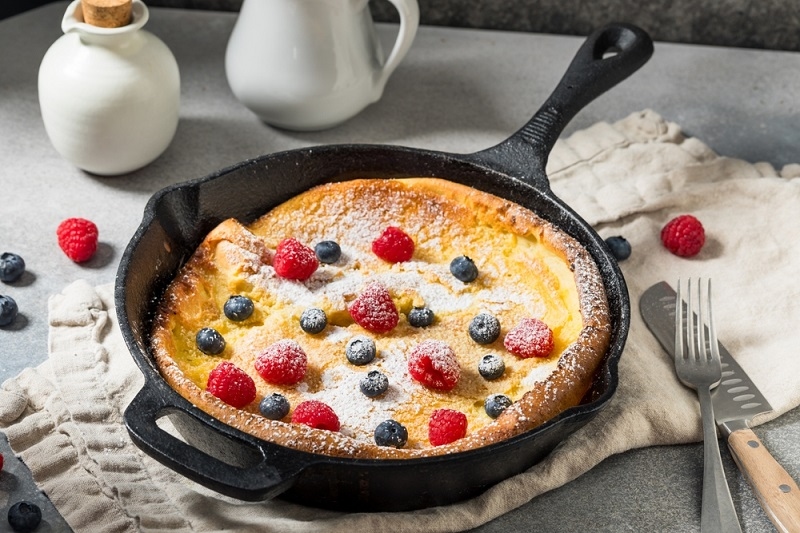
German pancake recipes are always popular because of their light texture and the way it bakes inside the oven with almost zero effort. Many people enjoy making it because the steps are simple and the batter reacts well to heat. This blog explains what makes the dish work, how it bakes, and the small things that help improve it. The goal is to keep everything easy to follow and clear for anyone trying it for the first time.
A Dutch baby pancake is a light dish that rises in a warm oven and forms tall edges. The batter is thinner than a regular pancake, which allows the heat to move through it faster. When the mixture hits the hot pan, the warm air inside helps the pancake rise in a simple way. There is nothing complex about it. The oven does most of the work after the ingredients are mixed.
Many people like that this pancake is soft in the middle and has a gentle flavor. It doesn’t feel heavy. It pairs well with powdered sugar and lemon juice, and some people also enjoy it with fruit. The texture is smooth and easy to eat, and that is one reason why the dish remains popular.
Another benefit is that the Dutch baby pancake does not require flipping or shaping. Once the batter is ready and poured into a warm pan, the rest happens on its own. The edges lift, the center stays soft, and the pancake sets into a warm, puffy shape. It is one of those meals that look interesting without needing much effort.
The thin batter also helps the pancake cook evenly. When heat spreads through the mixture, the rise begins within the first few minutes. The oven makes the edges curl upward, and every batch comes out slightly different, which gives the dish a natural charm. The entire process stays simple, and that is what makes it a good choice for many kitchens.
Top Pick: Persian Crusty Bread Traditional Baking and Modern Recipes
An oven-baked pancake rises differently from a pancake prepared on a stovetop. The heat surrounds the pan from all sides, and this helps the edges rise higher. The middle stays soft because it receives less direct heat, but the edges lift fast. This creates a shape that looks warm and puffy.
The oven method is easier for many people because it removes the need for flipping. You prepare the batter, warm the pan, and place everything in the oven. It reduces mistakes and gives a cleaner finish. Many prefer this because the pancake forms evenly on its own.
Another thing that sets the oven version apart is the colour. The edges turn golden, while the centre remains light and soft. The texture feels balanced. It is not too crisp, not too soft, just the right middle point that works well for most tastes.
The following list will help you with the different types of ingredients needed to make Dutch baby pancake:
The recipe needs eggs, flour, and milk. These form the main structure of the pancake and help it rise in the oven.
A small amount of sugar is added to give the pancake a mild sweetness without making it too heavy.
A pinch of salt and a simple flavor like vanilla or nutmeg improve the taste. Butter helps the pancake lift and keeps the pan smooth.
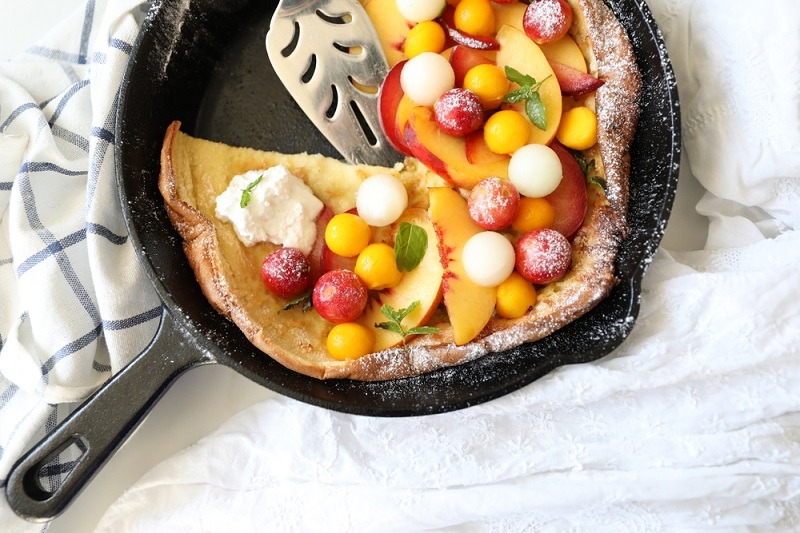
It is extremely easy to make a German pancake recipe; you can just refer to the following steps:
Blend the eggs, flour, milk, sugar, and light flavoring until the mixture becomes smooth. A simple blend helps the pancake rise better in the oven.
Place the pan in the oven with pieces of butter. Let the butter melt fully. A hot pan helps the batter puff up when added.
Pour the smooth batter into the hot pan without mixing it. Place the pan back in the oven and let it rise. Keep the door closed during this time.
When golden and puffy, remove the pancake from the oven. Add powdered sugar or lemon juice on top. Serve warm for the best taste.
You can follow the three following tips to improve the taste of the Dutch Puff Pancake:
Warming the eggs and milk before mixing helps the batter blend smoothly. Cold ingredients slow down the mixing, but warm ones create a softer texture. This smoother batter rises better in the oven because the heat moves through it faster. When the batter hits the warm pan, the rise begins right away and helps form the tall edges. This step also keeps the center soft and prevents uneven texture. It is a simple habit but makes the pancake steadier and more balanced.
The pan needs to be hot before the batter is added. When the butter melts in the warm pan, it coats the surface evenly. Pouring the batter onto the hot pan helps the edges rise fast. This early heat creates the curl that the pancake is known for. A hot pan also prevents sticking and gives a light golden colour to the edges. The rise happens mostly in the first few minutes, so this step makes a big difference. Without it, the pancake might rise unevenly or stay flat.
Keeping the oven door closed helps the pancake stay puffy. When the door opens, warm air escapes, and the temperature drops. This causes the rise to fall. Even a small drop in heat can affect the shape. By leaving the door closed, the pancake bakes at a steady temperature and forms a balanced shape. The edges stay tall, and the center stays soft. This habit also helps the colour develop nicely. It may seem small, but it has a strong effect on the final look.
Must Read: Why Every Persian Home Displays a Sofreh with Pride
A German pancake recipe makes a warm dish with a soft centre and tall edges. The steps stay simple, and small habits improve the rise. It works well for breakfast or any relaxed moment. Anyone can make this dish with ease and enjoy its light and puffy texture.
This content was created by AI